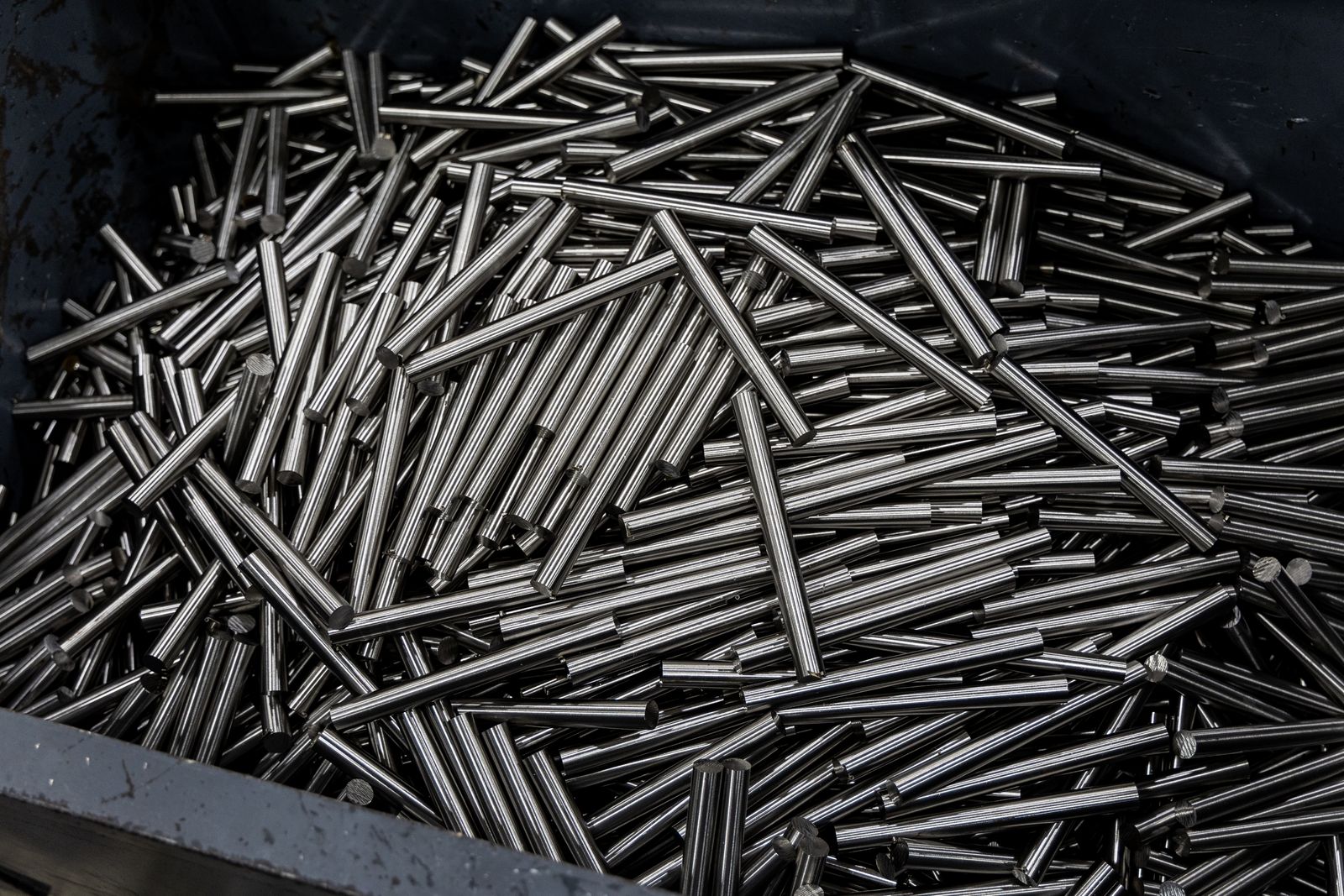
What changes when 416 Stainless Steel is ordered at 1/2 in
A martensitic stainless used when shops need high machinability, useful strength, and controlled heat-treatment response. At 1/2 in, the RFQ should treat grade, diameter, condition, finish, usable length, quantity, documents, and delivery as one purchasing description.
416 requirements often turn on condition as much as diameter. We source to the stated condition, dimensional need, certification package, and cut-length plan. This diameter sits in a common bar-fed turning range, but guide-bushing clearance, ovality, finish, straightness, and usable length still need to match the actual setup.
Nominal size is only the starting point. State the acceptable incoming diameter range, roundness or ovality requirement, straightness, surface finish, and inspection method whenever those variables can affect the guide bushing, collet, unattended run, or final part.
Approximate bar weight and quantity planning
The planning weight for 1/2 in 416 Stainless Steel is approximately 0.674 lb/ft. This is an estimate for quoting and handling—not a certified shipping weight.
| Nominal length | Approx. weight per bar | Planning use |
|---|---|---|
| 36 in | 2.02 lb | Feeder or magazine planning |
| 48 in | 2.70 lb | Feeder or magazine planning |
| 72 in | 4.04 lb | Feeder or magazine planning |
| 144 in | 8.08 lb | Full-length or conversion planning |
Actual weight varies with diameter tolerance, density, cut-length tolerance, and count. Confirm bundle size, piece count, carrier limits, and the usable length range before release.
Cut-length and machine-fit plan
Do not treat 36, 48, 72, or 144 inches as universal standards. State the machine and feeder, usable minimum and maximum length, remnant strategy, end squareness or chamfer, burr limits, packaging orientation, and whether pieces must remain segregated by heat or lot.
For repeating programs, record actual incoming maximum and minimum diameter, heat identity, hardness where relevant, and observed machining behavior. That evidence is more useful than assuming every heat or commercial finish will run the same.
How to specify this exact requirement
- 416 Stainless Steel / UNS S41600
- 1/2 in nominal diameter plus the required incoming tolerance
- Condition, hardness, finish, straightness, and surface requirements
- Usable or cut length, end condition, quantity, destination, and need-by date
- Governing specification and revision, requested MTR/CoC, heat-lot, origin, traceability, and no-substitution flow-downs
Current availability requires a written quote. Exact Bar may evaluate stocked and source-to-order routes. The web page does not establish stock status, source approval, compliance, documents, delivery timing, or permission to substitute.
Regional sourcing from the Chicago desk
This exact combination can be evaluated for buyers in Chicago, the O’Hare and northwest-suburban manufacturing corridors, Rockford, Southeast Wisconsin, and northern Indiana. The geographic page describes the regional buying context; the written quote confirms the actual source and delivery route.
Continue this sourcing path
Request this grade and diameter
Questions about this requirement
Is there a minimum order for 1/2 in 416 Stainless Steel?
No. Exact Bar evaluates the quantity the job requires, including one-job, bridge, repair, prototype, and repeat-release requirements. Availability and price remain requirement-specific.
Is 1/2 in 416 Stainless Steel currently in stock?
Request current availability. Exact Bar uses stocked and source-to-order routes and confirms the proposed source, condition, processing, documents, quantity, and timing in writing.
What should the RFQ include for this combination?
Send the exact grade, nominal and acceptable diameter range, condition or hardness, finish, cut length, quantity, governing specification, requested documents, destination, and need-by date.